


Facelift Surgery Toronto
Royal College-certified Plastic Surgeon Dr. Dimitrios Motakis specializes in deep plane facelift surgery in Toronto, tailoring each procedure to the patient's anatomy, aging pattern and goals.




Dr. Motakis' Approach to Facelift Surgery
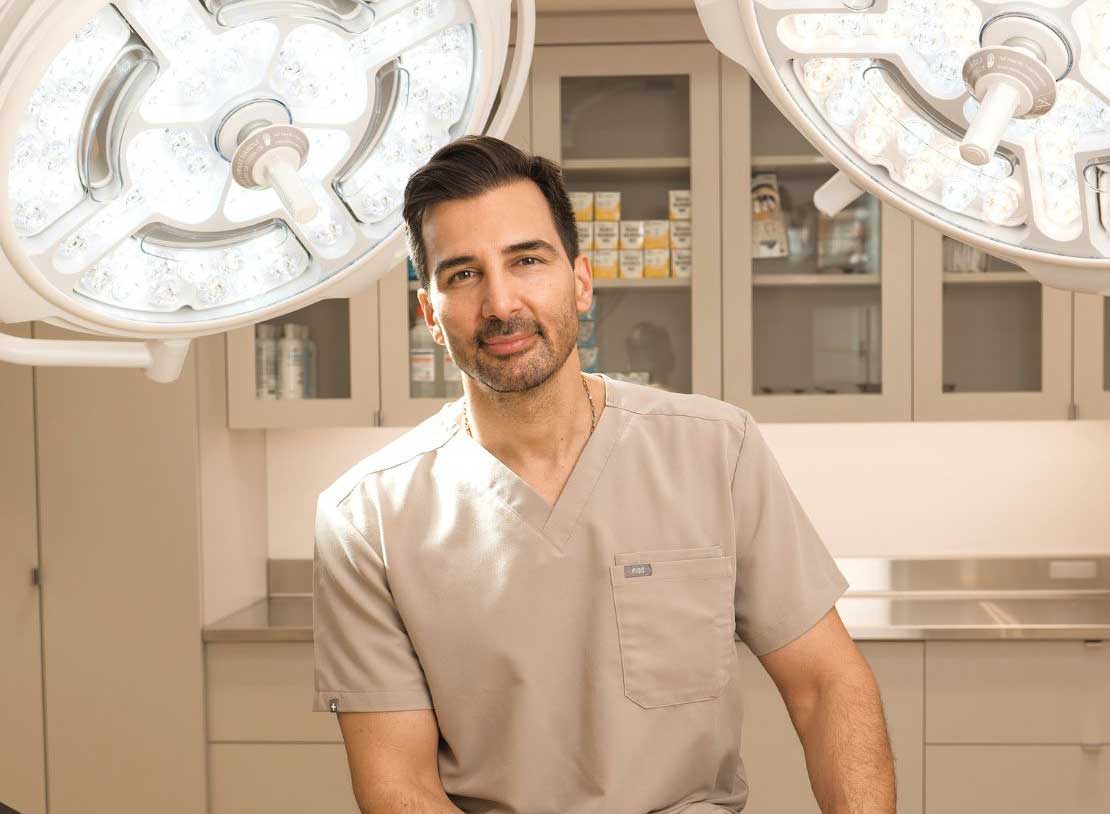
A structural approach to facial rejuvenation, planned around your anatomy rather than a procedure name.
Every consultation begins with a structural assessment, not a recommendation for surgery. Dr. Motakis evaluates the anatomy of the face and neck, the degree and pattern of tissue descent, skin quality and underlying support to understand what is actually creating the changes you see.
For facelift surgery, he performs the deep plane technique exclusively. By releasing the retaining ligaments and repositioning the deeper facial tissues, the lift is held by structure rather than by tension on the skin. A natural result does not mean making the smallest possible change; it means returning descended tissue to where it once sat so the skin can lie at rest rather than being asked to hold the lift.
Facial aging is rarely a single problem. A facelift repositions descended tissue, but it does not restore lost volume, improve skin surface, or correct a heavy brow or aging eyelids. Position, volume and skin quality are assessed separately, and where the anatomy calls for it, the facelift is combined in the same operation with neck lift, fat grafting, brow lift, upper or lower eyelid surgery, lip lift or full-face laser resurfacing. Treating these together means one recovery and a result that is coherent across the whole face rather than corrected one region at a time.
That assessment can also lead to a recommendation not to operate. If the degree or pattern of aging does not yet warrant a facelift, waiting or non-surgical care may be the better answer.
Book Consultation
What to Expect From Your Consultation With Dr. Motakis
A facelift consultation is not simply about choosing a procedure. It is an opportunity to understand what is changing beneath the surface of your face - and whether surgery is the right next step.

Start With Your Goals
Dr. Motakis will ask what you have noticed, what concerns you most and what you hope to preserve or improve. He will also review your medical history, previous facial surgery and relevant past treatments.
A Structural Assessment
He examines your face and neck as a whole, including skin quality and elasticity, tissue descent, facial volume, jawline, neck anatomy and overall facial balance. The goal is to understand what is actually driving the changes you see, rather than treating individual features in isolation.
A Clear Recommendation
Dr. Motakis primarily performs deep plane face and neck lifting. If your anatomy and goals make you a suitable candidate, he will explain why this approach is recommended and how the operation would be tailored to you. If a facelift is not appropriate - or not appropriate yet - he will tell you that too.
Understand The Plan
If surgery is recommended, you will go through the proposed operation in detail: what it involves, what recovery looks like, the risks, timing and pre-operative requirements, and the fees. You will also leave with a clear understanding of what the operation will not correct, and whether another treatment is better suited to those concerns. There is time to ask questions and to consider the recommendation. There is no expectation that you decide or book surgery on the day.
What to Expect From Your Facelift Surgery
Facelift surgery is a cosmetic procedure and is not covered by OHIP. Your final quote reflects the surgeon's fee, facility fee and anesthesia, as well as the extent of surgery and whether other procedures are being performed at the same time. Financing options are available and can be discussed during your consultation.
Procedure
Several Hours
Exact operating time varies depending on your anatomy, the extent of the face and neck surgery and whether other procedures are performed at the same time.
Downtime
2-4 Weeks
Most healing occurs during the first two weeks. Most patients are socially presentable within approximately 2-4 weeks, although swelling, tightness and numbness continue to improve beyond this point.
Final Results
6-12 Months
Most swelling resolves much earlier, but the face continues to settle and refine over several months. Final results are generally visible from around six months, with further maturation continuing toward 12 months.
Longevity
10-15 Years
Deep plane facelift results often last 10-15 years, although the natural aging process continues.
More About Dr. Dimitrios Motakis
Dr. Motakis is a Royal College-certified plastic surgeon with over 17 years of experience, specializing in facial rejuvenation surgery in Toronto. Face and neck lifting has remained a central focus of his practice throughout that time, with patients travelling from across Canada and internationally for his anatomy-driven, natural-result approach.
 MD, PhD, McGill University
- Royal College-certified Plastic Surgeon, FRCSC
- Member, Canadian Society for Aesthetic Plastic Surgery (CSAPS)
- Licensed, College of Physicians and Surgeons of Ontario (CPSO)

SKIN TO IT Podcast
Guest feature, "Deep Plane Facelift: What Patients Should Know," July 2026.
Journal Publication - Dermatologic Surgery
Co-author of a clinical study examining whether prior injectable treatments affect complication rates in deep-plane facelift surgery.
Textbook Contributor
Plastic Surgery, 3rd Edition (Elsevier)Contributing author of the "Soft-Tissue Fillers" chapter.
Before & After Results
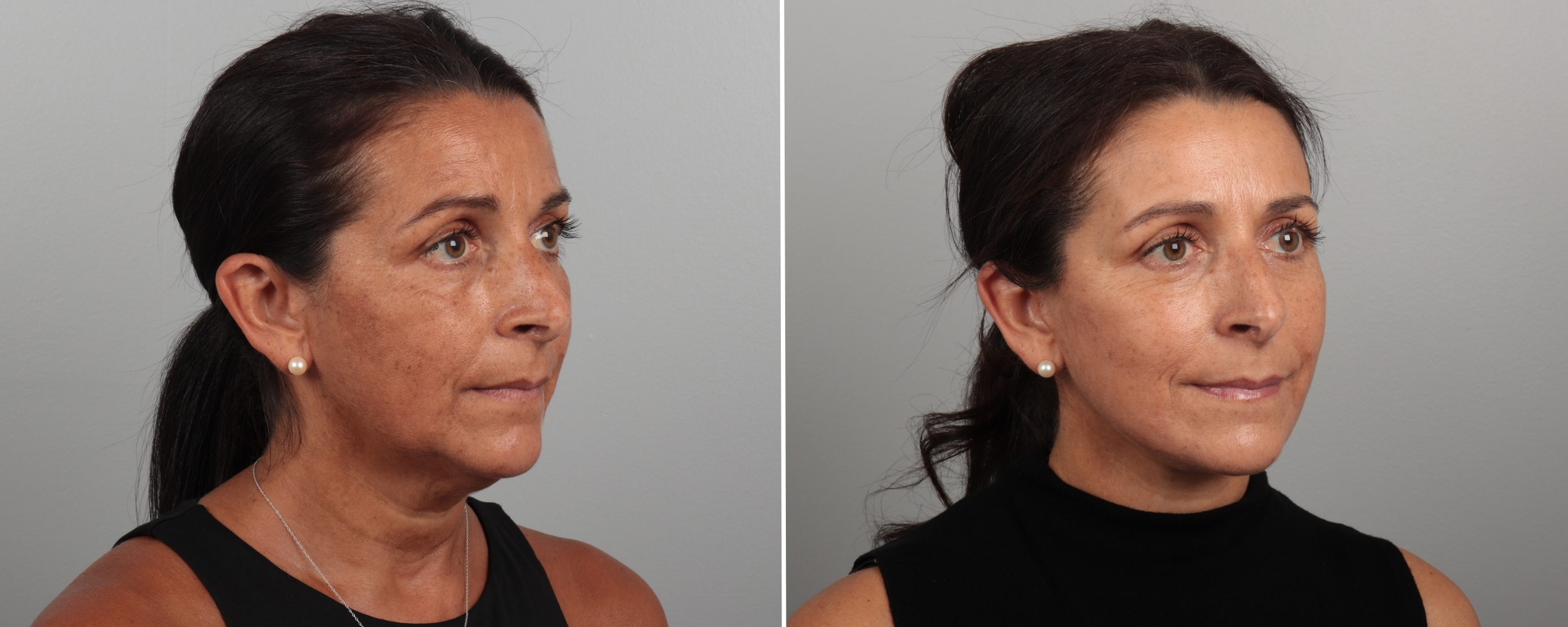
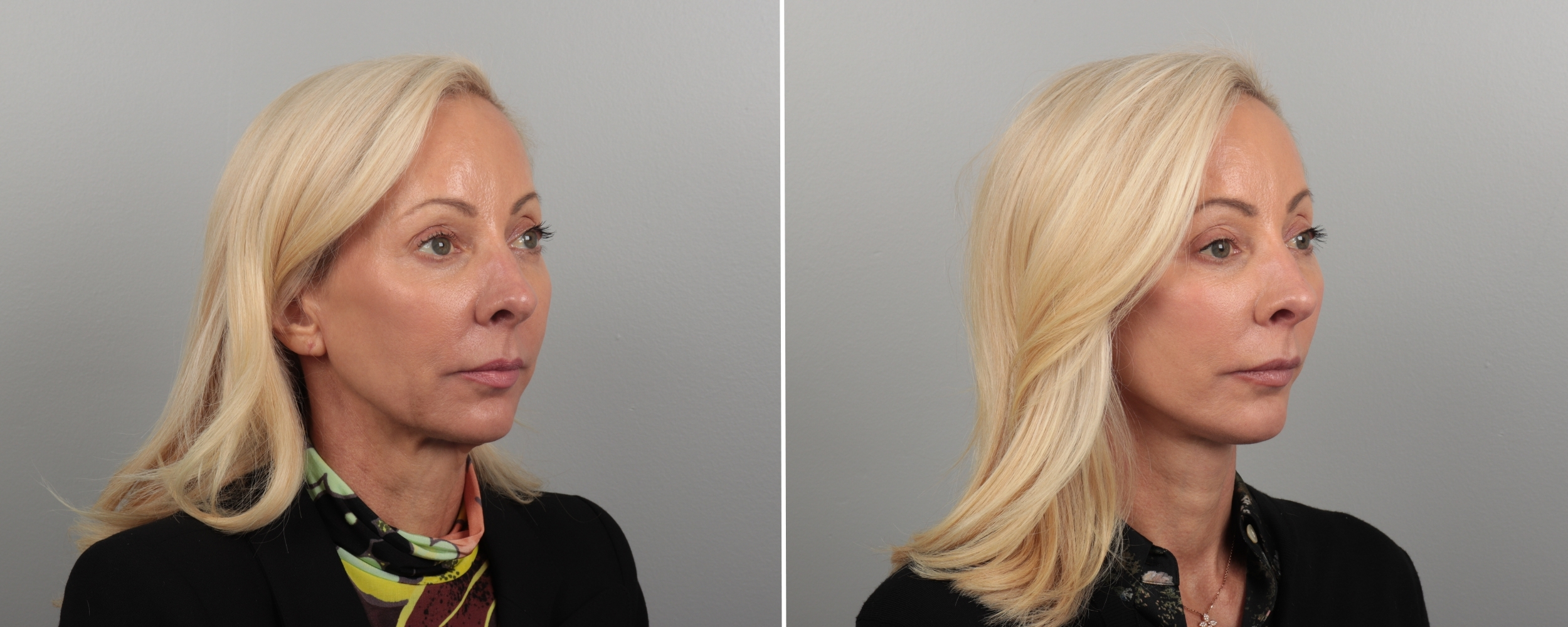
Results from Dr. Motakis' facial rejuvenation surgery, including deep plane face and neck lifts. View the full gallery for additional angles and individual case details.
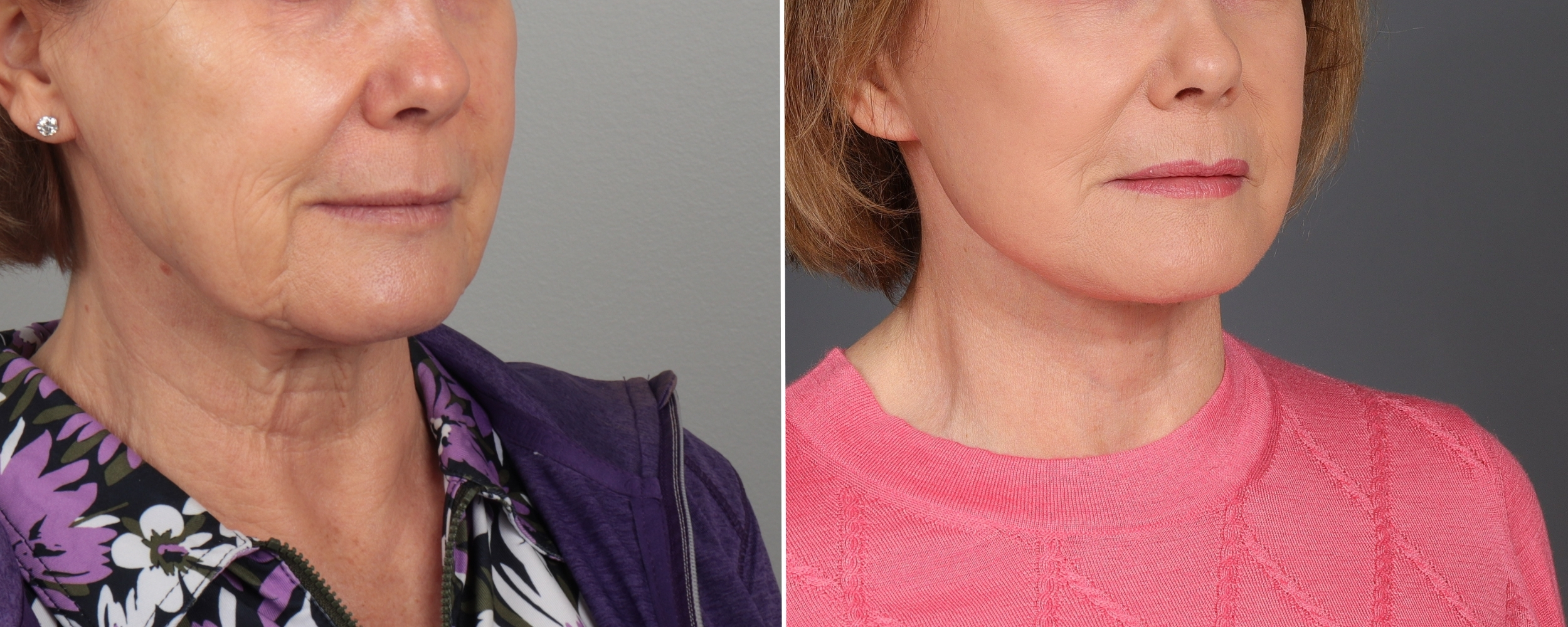
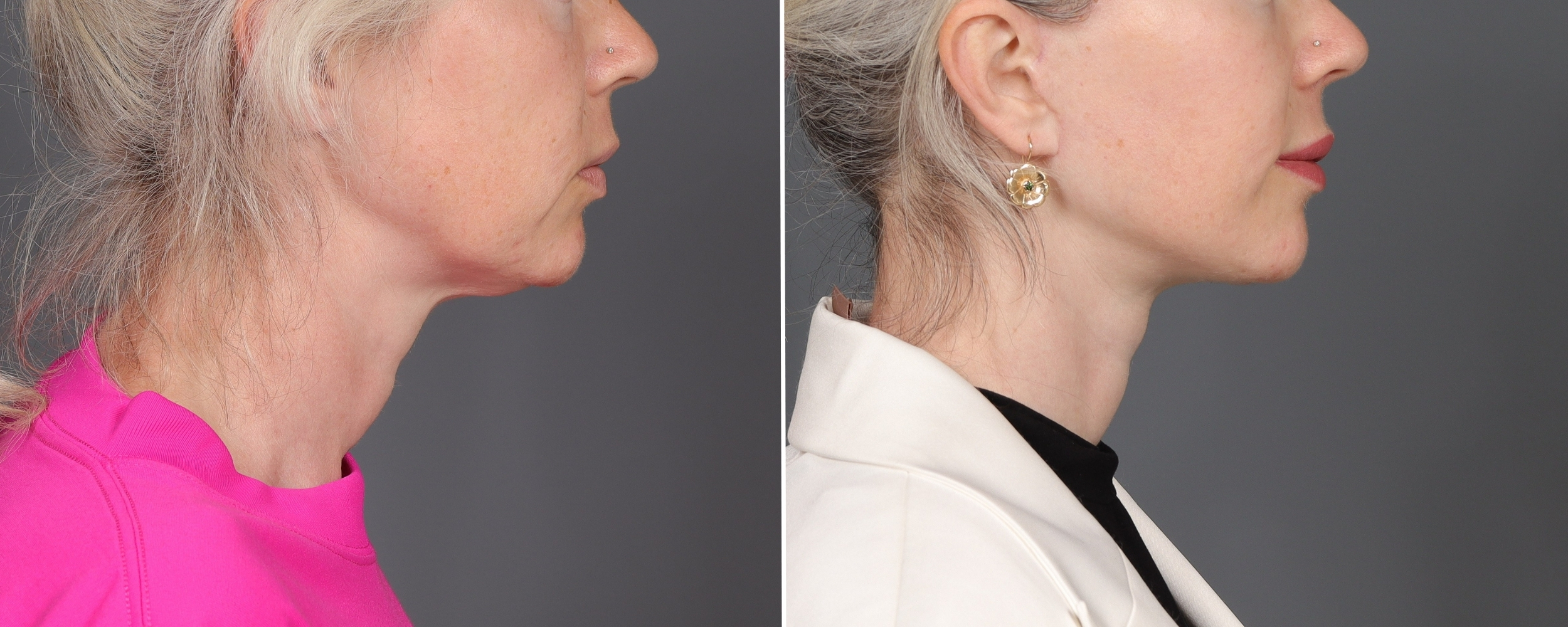
Case Study
This patient, in her early 70s, had undergone a previous facelift over a decade earlier. While her skin quality remained excellent, deeper structural aging had progressed: volume loss through the midface, herniated buccal fat adding heaviness to the lower face, and enlarged submandibular glands softening her jawline.
Her deep plane face and neck lift was tailored to these specific findings, addressing the displaced fat, restoring midface volume through fat grafting, and reducing her submandibular glands to sharpen her jawline.
At four weeks, the direction of her result is already visible, but this remains an early stage of recovery. Her face and neck will continue to soften and settle over the months ahead. The operation itself was tailored to her underlying anatomy and the specific changes affecting her face and neck.
Dr. Motakis Explains The Case
Ready For Your Personalized Facelift Consultation?
Book a one-on-one with Dr. Motakis to talk through your goals, your anatomy and whether a deep plane facelift is the right next step for you.

Who Is a Candidate for a Facelift?
Candidacy is guided by individual anatomy, overall health and the degree of facial and neck aging rather than age alone. Patients in their 40s through their 70s may all be candidates for facelift surgery, but whether surgery is appropriate - and how extensive it should be - is determined individually.
- Generally good health, with no conditions that impair healing
- Reasonable skin elasticity (we can review this in consultation)
- Visible jowling, midface descent, or neck laxity affecting confidence
- Non-smoker, or willing to stop all nicotine well in advance of surgery
- Realistic expectations about outcome and recovery
- Ability to follow post-operative care instructions
Risks & Considerations
As with any surgical procedure, facelift surgery carries risks. These are uncommon but are reviewed in detail during consultation and include:
 Bleeding or hematoma, which may require additional treatment or a return to the operating room
- Temporary or, very rarely, permanent nerve changes affecting facial movement or sensation
- Asymmetry requiring a touch-up procedure
- Infection at the incision site
- Delayed wound healing or visible scarring
- Anesthesia-related risk, discussed with your anesthesiologist beforehand
Who May Not Be a Good Candidate?
A facelift may not be recommended, or may need to be delayed, for patients with significant medical conditions that increase the risk of surgery or impair healing and recovery. Common examples include uncontrolled high blood pressure or diabetes, heart or lung disease that limits fitness for anesthesia, bleeding disorders or blood-thinning medication that cannot be safely paused, current smoking or nicotine use, autoimmune or connective tissue conditions that affect wound healing, an active skin infection or condition in the treatment area, and a history of poor scarring. Surgery may also be declined where expectations do not match what an operation can realistically achieve relative to non-surgical options.
These are evaluated individually during consultation, not applied as blanket exclusions.
Types of Facelift Surgery
It is worth clarifying one point of confusion. "Deep plane" describes what is done beneath the skin, not the size of the operation. Even within the deep plane approach, the length and number of incisions vary considerably between patients. A younger patient with early jowling and good skin quality may need a much shorter incision, often confined to the area in front of the ear, with no extension behind the ear or into the hairline. The small incision beneath the chin used to address the neck directly is also often unnecessary in these patients; it is generally reserved for older patients, or those with a heavier neck, where the muscles and fat under the chin need to be treated as well. A patient with more advanced descent and significant neck laxity will need both the longer incision and the submental one to achieve a proper result.
At the earliest stage of aging, where the changes are limited to the midface and brow, the incisions around and behind the ear can be avoided altogether. In these patients Dr. Motakis may perform an endoscopic midface and brow lift through small incisions concealed entirely within the hairline, repositioning the deeper tissues without any incision at the ear.
What is often marketed as a "mini facelift" is, in Dr. Motakis's practice, simply a deep plane facelift performed through fewer and shorter incisions in a patient whose anatomy allows it. The technique beneath the skin does not change; the extent of what needs to be addressed does.
What Actually Separates a Deep Plane Facelift From a SMAS Lift?
The key distinction is how the retaining ligaments and deeper facial tissues are handled. In many traditional SMAS facelift techniques, the SMAS is tightened, folded or repositioned while the retaining ligaments that anchor the midface remain intact or are only partially released. The lift is therefore limited by those attachments, and some of the work of holding the result falls on the skin and superficial tissues.
In a deep plane facelift, the dissection passes beneath the SMAS and the retaining ligaments are released. Once freed, the SMAS, the fat pads of the cheek and the platysma of the neck can be repositioned together as a single connected unit, and the underlying deep tissues and muscles are tightened and sculpted as needed. The lift is carried by structure rather than by tension on the skin, which is why the result looks natural at rest and holds over time.
This is the reason Dr. Motakis performs the deep plane approach exclusively. It also allows the midface, jowls, jawline and neck to be treated as connected parts of the same aging process rather than as separate problems.
Dr. Motakis Explains: SMAS vs. Deep Plane
By Surgical Technique
Common facelift techniques you may encounter - and how they differ from the deep plane approach Dr. Motakis uses exclusively for facelift surgery.
Deep Plane Facelift Surgery
Deep plane facelift surgery is the approach Dr. Motakis uses exclusively for facelift surgery. It works beneath the superficial layers of the face, releasing the key retaining ligaments so that descended deeper tissues can be repositioned, rather than relying primarily on skin tightening.
For suitable patients, this allows changes through the cheeks, jowls, jawline and neck to be addressed as connected structures. The exact extent of surgery is still individualized; "deep plane" describes the anatomical approach, not a one-size-fits-all operation.
Patients will also encounter terms such as "extended deep plane" and "preservation deep plane." These are not separate operations. They describe variations in how far the release is carried and how the deeper tissues are handled once freed, and they fall within the range of what Dr. Motakis does in every deep plane facelift, adapted to the individual patient's anatomy rather than offered as distinct procedures.
Preservation Deep Plane Face and Neck Lift
The term is often shortened to "preservation facelift," but it properly describes a preservation deep plane face and neck lift, and it is the technique Dr. Motakis uses most. The concept is straightforward: the deeper tissues are fully released and repositioned, but the skin is lifted off its underlying base as little as possible. In the neck especially, the skin is kept attached to the platysma muscle beneath it rather than being separated from it as a thin sheet.
Keeping the skin attached to the tissue beneath has several effects. Healing is faster and more reliable, with fewer complications, because the skin retains its full blood supply. The improvement in neck contour and skin texture is greater, because the skin and muscle are lifted and tightened together rather than the skin being redraped over a separately tightened muscle. The same principle is applied to the sides of the face, where as much of the underlying tissue as possible is kept attached to the skin so that there is no thin, laminated skin flap over the cheek and jawline. The result is natural contours from the outset, better healing and an easier recovery.
Preservation and extended are not competing approaches. The extent of the deep release is determined by the anatomy; the preservation principle governs how the skin is handled above it. Dr. Motakis applies both in the same operation.
SMAS Facelift Surgery (Including SMASectomy)
A SMAS facelift works with the superficial musculoaponeurotic system, or SMAS, a supportive tissue layer beneath the skin. Depending on the technique, the SMAS may be tightened, folded, repositioned or partially removed. A SMASectomy is one variation in which a selected portion of this tissue is excised before the remaining layer is repositioned.
Dr. Motakis does not perform traditional SMAS facelifts; he performs deep plane facelifts exclusively. His reasoning is that releasing the retaining ligaments allows more complete repositioning of the SMAS and overlying tissues. For patients with meaningful midface descent, jowling and neck laxity, this can provide a more comprehensive structural correction than relying primarily on tightening the SMAS.
Deep Plane Facelift vs. SMAS Facelift: Why Dr. Motakis Chooses Deep Plane
The key distinction is how the retaining ligaments and deeper facial tissues are handled. In many traditional SMAS facelift techniques, the SMAS is tightened, folded or repositioned while the retaining ligaments that anchor the midface remain intact or are only partially released. The lift is therefore limited by those attachments, and some of the work of holding the result falls on the skin and superficial tissues.
In a deep plane facelift, the dissection passes beneath the SMAS and the retaining ligaments are released. Once freed, the SMAS, the fat pads of the cheek and the platysma of the neck can be repositioned together as a single connected unit, and the underlying deep tissues and muscles are tightened and sculpted as needed. The lift is carried by structure rather than by tension on the skin, which is why the result looks natural at rest and holds over time.
This is the reason Dr. Motakis performs the deep plane approach exclusively. It also allows the midface, jowls, jawline and neck to be treated as connected parts of the same aging process rather than as separate problems.
Endoscopic Facelift
An endoscopic facelift uses a small camera and specialized instruments through small incisions concealed within the hairline. Endoscopic techniques are suited to lifting the brow and midface; they do not address excess skin, and cannot reach the lower face or neck.
The limitation is that by the time the upper face and midface have descended enough to warrant surgery, most patients also have excess skin through the lower face and neck that can only be corrected through a lower face approach. An endoscopic forehead and midface lift on its own is therefore appropriate only in a small group of patients: those who are genuinely young, with early descent of the brow or midface and no other findings.
Dr. Motakis performs this procedure in those select patients. When jowling, jawline changes or neck laxity are present, he does not use an endoscopic approach as an alternative to a deep plane face and neck lift.
MACS Facelift Surgery
MACS stands for Minimal Access Cranial Suspension. A MACS facelift is a short-scar technique that uses suspension sutures to elevate facial tissues through more limited dissection.
The limited dissection means the retaining ligaments are not adequately released, and the lift depends on suspension sutures holding tissue that is still tethered in place. Without that release the result is less lasting, and the approach shares the same fundamental limitations as a SMAS lift or any other technique that tightens the deeper tissues without freeing them. Dr. Motakis does not perform MACS lifts; his facelift practice uses the deep plane approach exclusively.
S-Lift Surgery
An S-lift is a limited-incision facelift named for the approximate shape of the incision around the ear. It generally concentrates on early laxity through the lower face and jowls.
A shorter incision is not automatically a better facelift. Dr. Motakis does not use an S-lift as an alternative to his deep plane approach. When aging involves the cheeks, jawline and neck together, he prioritizes sufficient access to address the underlying structures rather than choosing the operation around minimizing incision length.
Short Scar and Mini Facelift Surgery
"Short scar facelift" and "mini facelift" are used more or less interchangeably. Neither is a standardized operation; both describe a facelift performed through more limited incisions, usually aimed at early jowling or lower-face laxity.
It is worth being clear about what these terms usually mean when they are marketed. In most cases the package is a short incision, minimal dissection beneath the skin and a quick recovery. The recovery is easy because very little has been done: the SMAS is at best minimally manipulated, the retaining ligaments are not released, and the result relies on skin tension. That typically produces an inadequate correction and early relapse, and many patients find they have had a procedure without a lasting benefit.
In Dr. Motakis's practice these terms describe the length of the incisions, not the technique. Every facelift he performs is a deep plane facelift; what varies is how much skin needs to be addressed. In a patient at an early stage of aging, the incisions can be limited to the area in front of the ear with only a short extension behind it, and no incision beneath the chin. That operation would reasonably be called a mini or short scar facelift, but beneath the skin it is the same deep plane release and repositioning. Once an incision beneath the chin is required to treat the neck directly, the operation is a full face and neck lift, regardless of what it is called.
If the changes are not significant enough to justify facelift surgery at all, waiting or non-surgical care may be more appropriate; a shorter incision is never a reason to operate earlier.
Weekend Facelift Surgery
'Weekend facelift' is primarily a marketing term rather than the name of a standardized surgical technique. It is often used to describe mini facelifts, limited-incision lifts or other procedures promoted around a shorter recovery.
Dr. Motakis does not recommend choosing facelift surgery based on a recovery label. A deep plane face and neck lift requires genuine healing time: most patients are socially presentable within approximately 2-4 weeks, while swelling, sensation and tissue settling continue to improve for considerably longer.
By Facial Area & Patient Profile
These terms often describe the area being treated or the patient being treated rather than a distinct facelift technique. In Dr. Motakis' practice, they do not necessarily represent separate operations.
Mid-Facelift Surgery
Mid-facelift surgery refers to rejuvenation of the central face, particularly descended cheek tissues and the area beneath the eyes.
Dr. Motakis evaluates these changes in the context of the entire face rather than assuming the midface requires an isolated operation. When cheek descent occurs alongside jowling or other facial aging, the deep plane approach can allow these structures to be repositioned as part of a more balanced facial rejuvenation.
Lower Facelift Surgery
Lower facelift surgery describes treatment of the lower third of the face, including jowling, loss of jawline definition and laxity around the mouth and chin.'
Lower facelift' describes an area rather than one particular technique. Because lower-face aging is often closely connected with changes in the neck, Dr. Motakis generally assesses these regions together rather than treating the lower face in isolation.
Cheek Lift Surgery
A cheek lift focuses on descended tissues through the midface and overlaps considerably with what is often called a mid-facelift.
Rather than treating the cheek as an isolated feature, Dr. Motakis considers how midface descent relates to the rest of the face. Where appropriate, a deep plane facelift can reposition descended cheek tissues as part of a broader structural lift.
Jawline Lift Surgery
'Jawline lift' is another descriptive term rather than one standardized operation. It generally refers to surgical improvement of jowling and loss of definition between the face, jaw and neck.
Dr. Motakis does not view the jawline as simply a loose-skin problem. Jowling is assessed together with the deeper facial tissues and neck anatomy so that the surgical plan addresses the structures contributing to the loss of definition.
Male Facelift Surgery
Male facelift surgery follows the same underlying principles of structural facial rejuvenation, but planning must account for differences in facial anatomy, hairline, sideburns, beard-bearing skin and the patient's facial proportions.
For suitable male patients, Dr. Motakis adapts his deep plane approach to the individual rather than applying a separate 'male facelift' technique.
Revision Facelift Surgery (Secondary Facelift)
Revision facelift surgery is performed after a previous facelift - sometimes many years later as natural aging continues, and sometimes to address concerns related to an earlier result.
Previous surgery changes the anatomy through scar tissue, prior tissue repositioning and existing incisions. Dr. Motakis therefore approaches revision facelift surgery individually, determining what can safely and appropriately be achieved based on the patient's prior operation and current anatomy.
Ponytail Facelift Surgery
A ponytail facelift is a non-standardized term generally used for procedures designed to create an upward lift through incisions concealed within or around the hairline. Depending on the surgeon, it may involve endoscopic techniques and can focus particularly on the brow, temples, cheeks and midface. Some published versions also incorporate deep plane dissection and neck treatment.
Dr. Motakis does not offer a “ponytail facelift” as a distinct procedure. His approach is to define the operation by the anatomy being treated rather than by a branded or minimally invasive label. For patients whose aging involves the midface, jowls, jawline and neck, he performs a comprehensive deep plane face and neck lift, with the extent of surgery tailored to the structural changes present.
Preparing For Surgery
What's asked of you in the weeks leading up to your facelift.
- Complete the required bloodwork and ECG at least 8 weeks before surgery. This allows time for results to be reviewed and, where needed, for additional medical clearance to be arranged before your date.
- Stop all smoking and nicotine products, including vaping and patches, at least 4–6 weeks before surgery and remain nicotine-free for 4–6 weeks afterward. Nicotine restricts blood supply to the skin and is one of the most important preventable risks to healing.
- Pause facial neuromodulators (Botox, Xeomin, Dysport) approximately 3 months before surgery so that the underlying muscles are at their natural baseline when the operation is planned and performed. Dermal fillers and biostimulants (e.g. Sculptra, Radiesse) in the surgical area are ideally avoided for a year beforehand. Timing of previous filler, and whether any needs to be dissolved, is assessed individually at consultation.
- Follow the medication and supplement instructions provided by the AvenueMD team. Certain anti-inflammatory medications, supplements, cannabis products and prescription medications must be paused at specific times before surgery.
- Plan for an overnight stay following surgery. Arrange for someone to collect you the following morning and stay with you for at least the first 24 hours after discharge. If you do not have someone available to help, our team can arrange experienced private nurses to support you at home for as long as you need. These nurses work regularly with facelift patients and are familiar with the early recovery, which makes the first days considerably smoother.
- Prepare your recovery space in advance: a wedge pillow or extra pillows for elevation, loose front-fastening clothing, gentle skincare products and easy, protein-rich foods.
These points are just a summary. Detailed written instructions for both preparation and recovery are provided well in advance, and reviewed in person with you by Dr. Motakis and the nursing team at a dedicated pre-operative appointment. Communication with the team continues throughout the period before and after surgery, so questions are answered as they arise rather than left until the day.
Recovery Timeline, Week By Week
Recovery from a deep plane face and neck lift is gradual. Most of the early healing takes place during the first two weeks, and most patients are socially presentable within approximately 2-4 weeks. Swelling, tightness, numbness and incision fading continue to improve for several months after that. Individual recovery varies, and Dr. Motakis’ team will guide you throughout the process.
Week 1
Swelling, bruising, tightness and numbness across the face and neck are expected. Swelling generally peaks around days 3-4 before beginning to improve. Dr. Motakis uses a temporary hemostatic net instead of drains following deep plane face and neck lift surgery; this is removed during the first few days, while sutures are typically removed around day 7.
Rest at home, take short gentle walks, use cold compresses as instructed and sleep on your back with your head elevated 30-45 degrees.
Week 2
Bruising is significantly improved for most patients, although some residual discoloration and swelling may remain. The face can still feel firm or tight, particularly along the jawline and neck, and numbness around the cheeks and ears is common.
Continue following your activity restrictions and postoperative care instructions. Travel during this period should be discussed with the AvenueMD team.
Weeks 3-4
By week 3, swelling and bruising are usually significantly improved, and many patients feel comfortable returning to desk work and low-key social activities. Makeup can generally be used once the incisions are closed and you have reached the appropriate stage of healing.
By approximately four weeks, most swelling has resolved and the jawline and neck are becoming more defined. Moderate exercise and activities such as hair colouring and heat styling may begin again once cleare
1 Month
At your one-month follow-up, Dr. Motakis reviews your healing and progress. Most social activities are comfortable by this stage, although some tightness, numbness and subtle swelling can remain.
Lymphatic drainage during the first month is performed by the AvenueMD team when appropriate. More strenuous activity and other treatments are reintroduced gradually according to your healing.
3–6 Months
Residual swelling continues to resolve, scars soften and fade, and sensations of tightness or numbness gradually diminish. Mild non-ablative laser or light treatments may be considered from around three months if you are cleared to proceed.
By six months and beyond, the final result is generally well established, although the face can continue to settle and mature naturally toward 12 months.
If you're planning a wedding, milestone event, or photoshoot, it's worth scheduling it after this timeline, once swelling has fully settled and incisions are at their most discreet.
Dr. Motakis Explains: What Recovery Looks Like
Hear From Dr. Motakis’ Patients
"It is with utmost pleasure I write my recent surgery experience with Dr Motakis..My entire experience from first meeting the staff and Dr Motakis I felt welcomed and cared for. He listened . He observed he asked me questions…his gentle confident approach made me feel I was in the right hands . Fast forward a week my results have surpassed my expectations. look like me but younger and refreshed..."
SANDY S

"I want to sincerely thank Dr. Dimitrios Motakis for his exceptional skill and care. I spent two years searching for the right surgeon, and he exceeded all my expectations.I had a facelift along with upper and lower blepharoplasty, and the results are truly amazing — natural, refreshed, and harmonious. I now receive so many compliments, and I feel confident and happy."
ALLA G
"I am writing this review to express my gratitude to Dr. Motakis and his wonderful staff for outstanding customer service. My experience during a recent surgical procedure was "top notch" from beginning to end.Dr. Motakis, in my opinion, is one of Toronto's top cosmetic surgeons. His extensive medical background, dirth of experience, excellent skill set as a surgeon and warm and kind demeanor makes my 5 out of 5 review very justified."
TRACEY K
"Dr. Motakis is an incredible gifted surgeon. On top of that, his staff is absolutely amazing! I'm extremely happy with my results and I am very happy that I went to him. I wouldn't trust anyone else, but him with my face. I recommended him to all my friends. Ladies this doctor is absolutely incredible. If you have any concerns, go to him, you will not be disappointed. I promise you that. A+"
LINA D
"I cannot say enough positive things about Dr. Motakis and his team. From the very moment I entered his facility, I felt welcomed by his attentive and caring staff. During our consultation, Dr. Motakis took his time to address all of my concerns leaving me with a great sense of confidence in his knowledge, attention to detail and eye for aesthetics. Overall, I’ve had a very positive experience and would highly recommend Dr. Motakis to anyone looking for a professional, highly skilled surgeon."
J G
"I would like to take this opportunity to thank Dr. Motakis and his team for the amazing experience I had at AvenueMD. From the consultation to the post op and final appointment , Dr. Motakis made me feel relaxed, well taken care of and treated with respect. There’s no doubt that he’s an artist in the field of plastic surgery and has the most incredible bedside manner"
D T
"I am forever grateful for the existence of this man. He is the most kind, honest, patient, professional, and detail oriented individual I have ever had the pleasure of dealing with. He has operated on me on a number of occasions now, and has basically held my hand throughout the entire experience - beforehand, during, and post-op. To be honest, Dr. Motakis is the only doctor I would allow to come near me with a scalpel."
ELENA D
Location & Contact
Clinic Hours
Weekends: Closed
Location & Parking
Street parking available + Davenport Rd & Bedford Rd. Paid parking also available at 189 Avenue Rd 55 Avenue Rd.
Facelift Surgery FAQ
A mini facelift is a broad, non-standard term for a more limited procedure, usually involving shorter incisions and less extensive tissue dissection. Dr. Motakis generally does not choose surgery around a 'mini' label. When meaningful facial and neck descent warrants surgery, he primarily favours a deep plane approach that allows deeper tissues to be released and repositioned more comprehensively. For earlier changes, waiting, other procedures or non-surgical treatment may sometimes be more appropriate.
Deep plane facelift results often last approximately 10-15 years, although no facelift stops the natural aging process. Longevity also varies with anatomy, skin quality, lifestyle and other individual factors.
Incisions are positioned within natural contours around the ear and hair-bearing areas where possible. Incisions continue to mature for several months and generally become increasingly discreet as healing progresses.
Yes. Depending on your anatomy and goals, facelift surgery may be combined with eyelid surgery, brow surgery, selective fat grafting and skin resurfacing. In Dr. Motakis' approach, the neck is assessed as part of the face and neck lift itself rather than treated as a separate add-on.
Cost varies depending on the extent of face and neck surgery, individual anatomy and whether other procedures are performed at the same time. Exact pricing is provided after your consultation and assessment.
Potentially. Revision or secondary facelift surgery can be considered after a previous facelift, including many years later as natural aging continues. Because prior surgery changes the anatomy and creates scar tissue, candidacy and surgical planning require an individual assessment.
For Dr. Motakis, a natural result does not mean making the smallest possible change. His deep plane approach is designed to release and reposition deeper facial tissues toward where they previously sat, while leaving the skin at rest rather than using skin tension to create the lift. The goal is a meaningful change that still looks balanced and recognizably like you - not tight, pulled or operated on.
Yes. The same deep plane principles can be applied to male facelift surgery, with the surgical plan adapted for facial anatomy, hairline, beard-bearing skin and the patient's individual goals.
Patients commonly experience swelling, tightness, pressure, numbness and some discomfort during the early recovery period. Medication is provided to help manage pain, and discomfort generally improves as the first week progresses.
Your anesthesia plan is reviewed with you before surgery and takes into account the procedure being performed and your individual medical needs. Safety, fasting requirements, medications and anesthesia-related considerations are reviewed as part of your pre-operative planning.
Out-of-town patients should plan to remain local for their early postoperative appointments. Short flights may be possible at approximately 10-14 days depending on healing, but travel should be discussed with the AvenueMD team before booking, particularly for longer or international flights.
Dr. Motakis performs deep plane facelift surgery exclusively rather than offering every named facelift technique as an equivalent option. Your consultation determines whether a deep plane face and neck lift is appropriate for your anatomy and goals, how it should be tailored, or whether surgery would be better deferred.
Your Journey Starts With a Conversation
Schedule a personal consultation with Dr. Motakis to understand your options and determine whether a deep plane facelift is the right approach for you.


