
What is it?
Rhinoplasty, commonly known as nose surgery, is a procedure designed to reshape and refine the nose to improve facial balance, symmetry, and—when indicated—breathing function.
Dr. Motakis performs rhinoplasty with a focus on natural balance and facial harmony. The objective is refinement rather than reinvention—enhancing nasal shape while preserving each patient’s natural character and identity. Small, thoughtful changes can significantly improve overall facial proportion while maintaining a result that looks natural, stable, and long-lasting.
Dr. Motakis’ approach to rhinoplasty emphasizes respect for normal anatomy, facial harmony, and long-term structural integrity. Each procedure is carefully tailored to refine nasal shape, improve symmetry, and address functional concerns such as breathing issues or structural irregularities, while preserving what is already natural and balanced. Results are designed to be permanent and to age naturally with the face.
How does it work?
Dr. Motakis almost exclusively performs closed (endonasal) rhinoplasty.
This technique places all incisions inside the nostrils, leaving no external or columellar incision (the narrow strip of skin betweenthe nostrils). Closed rhinoplasty is technically more intricate and requires advanced surgical experience, but it allows for precise reshaping while minimizing disruption to the surrounding soft tissues.
By preserving tissue planes and maintaining structural integrity, this approach results in a more discreet surgical experience and a smoother recovery. Patients often benefit from:
- Faster recovery
- Less swelling
- Earlier return to work and social activities
- No external indication that surgery was performed
This refined and elegant technique allows patients to become socially presentable sooner, without visible signs of surgery.
Preservation Rhinoplasty
In most cases, Dr. Motakis performs preservation rhinoplasty, or a modified preservation rhinoplasty, depending on individual anatomy.
Preservation rhinoplasty restores and respects the nose’s natural anatomy by maintaining existing structures rather than dismantling and rebuilding them. The goal is to refine the nose while preserving its inherent support, function, and balance.
In contrast to traditional structural rhinoplasty—which has historically relied on removing and reconstructing nasal frameworks—preservation rhinoplasty works with the patient’s native anatomy to achieve a more natural, functional, and harmonious outcome. When full preservation is not appropriate, a modified preservation approach is used, applying the same principles while tailoring the technique to the specific needs of the patient.
Primary Rhinoplasty
Dr. Motakis performs primary rhinoplasty only. Revision rhinoplasty is not offered, as it represents a fundamentally different and more complex category of surgery requiring separate techniques and considerations.
Recovery and downtime
Most patients are able to return to work and light activity within 2 weeks. Swelling improves progressively over the first several weeks, while subtle refinement of the nasal tip may continue as healing advances. The final contour evolves naturally over time and the final result is achieved one year after surgery.
Dr. Motakis and his team provide detailed post-operative care instructions to ensure comfort, safety, and the most refined final outcome.
Frequently Asked Questions
Is There Visible Scarring?
There is no visible scarring with standard endonasal rhinoplasty. No incision is placed on the columella, which is the narrowest part of the nose between the nostrils.
Occasionally, a nostril (alar) reduction may be required. When this is necessary, small incisions are placed within the natural crease between the nose and cheek. These scars heal discreetly and are typically imperceptible.
Who is a good candidate for Rhinoplasty?
Ideal candidates are individuals who wish to refine nasal shape, correct structural irregularities, or restore symmetry following injury. Candidates should be in good health and have realistic expectations.
What concerns can Rhinoplasty address?
Rhinoplasty can refine the nasal bridge, reduce a dorsal hump, reshape the nasal tip, narrow the nostrils, or correct breathing issues caused by a deviated septum.
Will I still look like myself?
Yes. AvenueMD’s approach emphasizes natural refinement, not reinvention. Dr. Motakis carefully sculpts the nose to enhance facial harmony while preserving your individual identity.
Is there visible scarring?
In most cases, incisions are hidden within the nostrils or placed discreetly beneath the nose. Scars are minimal and virtually invisible once healed.
How long do results last?
Results are long-lasting. The structure of the nose is permanently refined, and while minor changes may occur with aging, the overall improvement remains stable for life.
Can Rhinoplasty be combined with other procedures?
Yes. It can be combined with Chin Augmentation or a Facelift to further enhance overall balance and facial proportion.
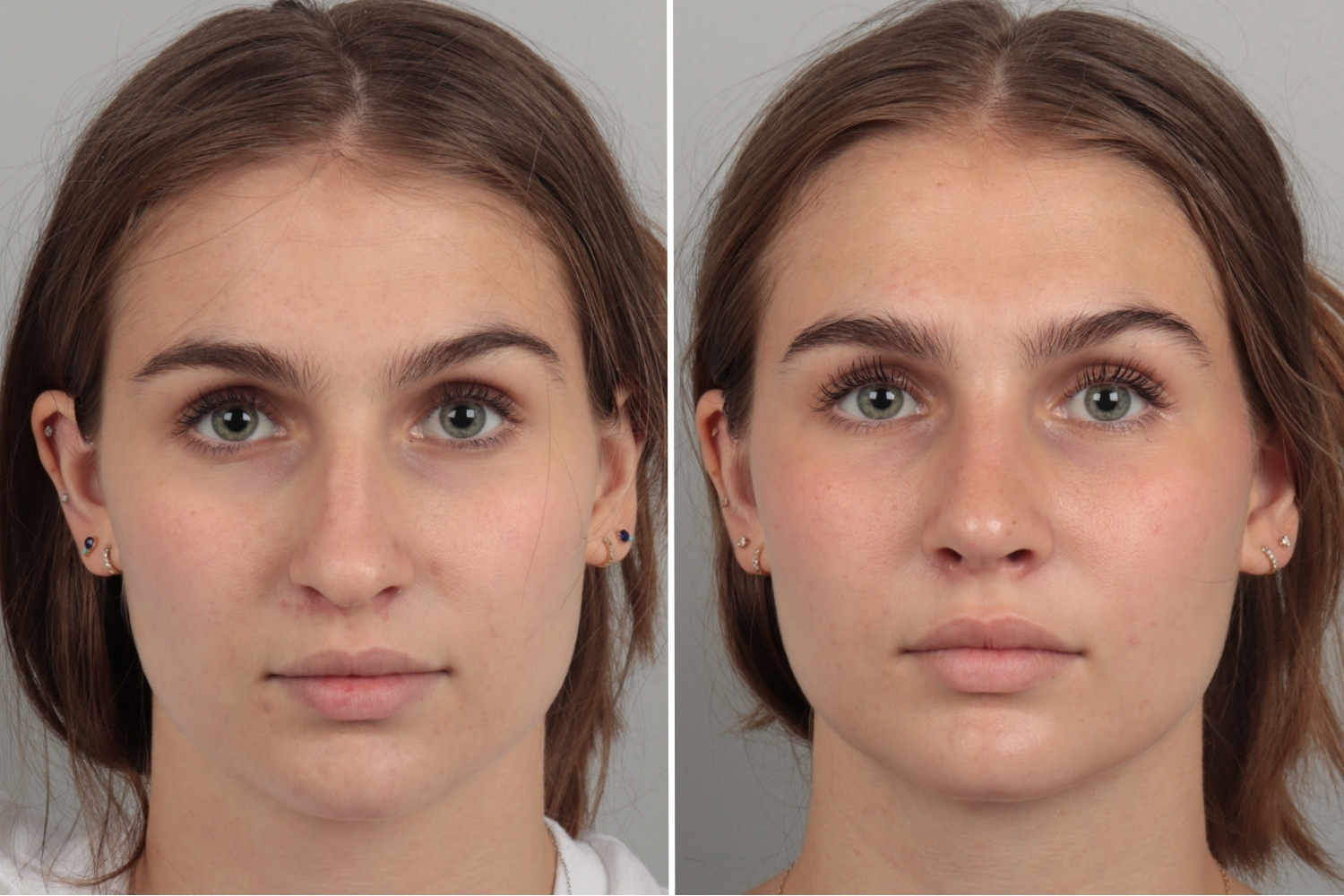
Featured Before / After
Rhinoplasty: 10438
.jpg)
.jpg)