
What is it?
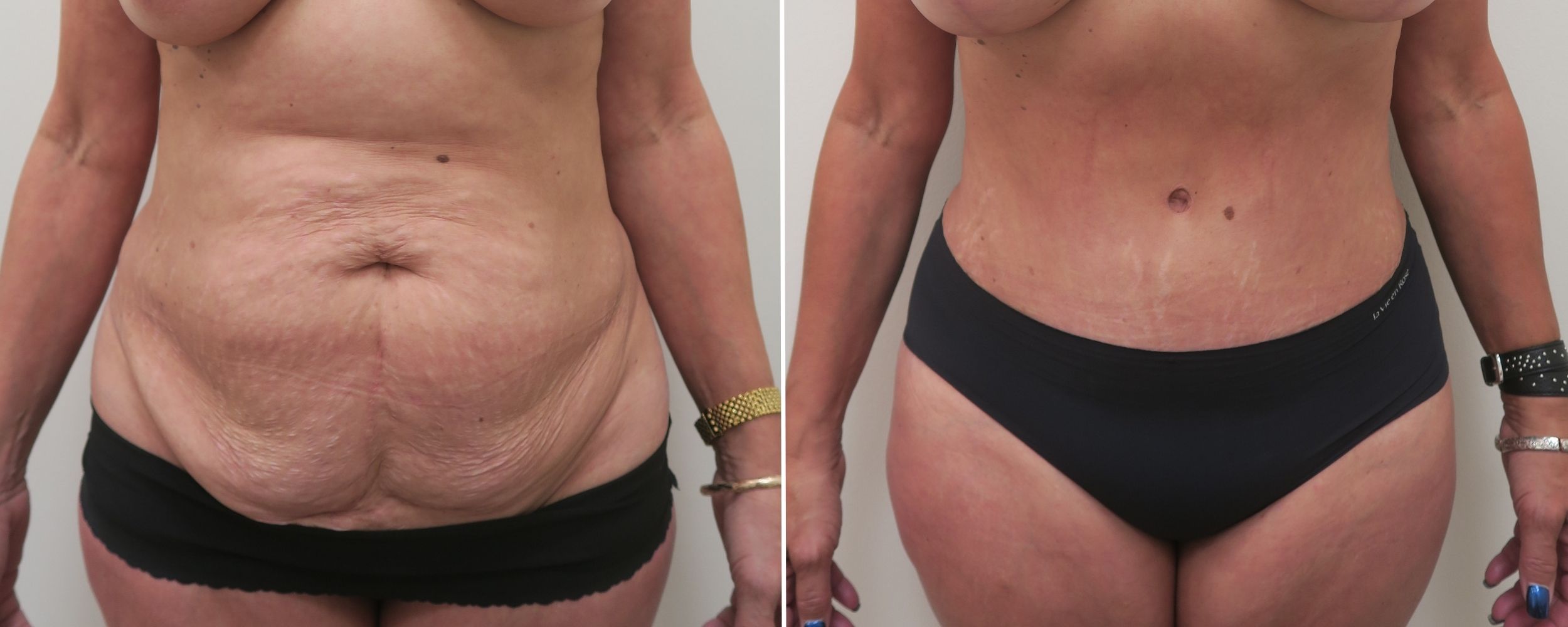
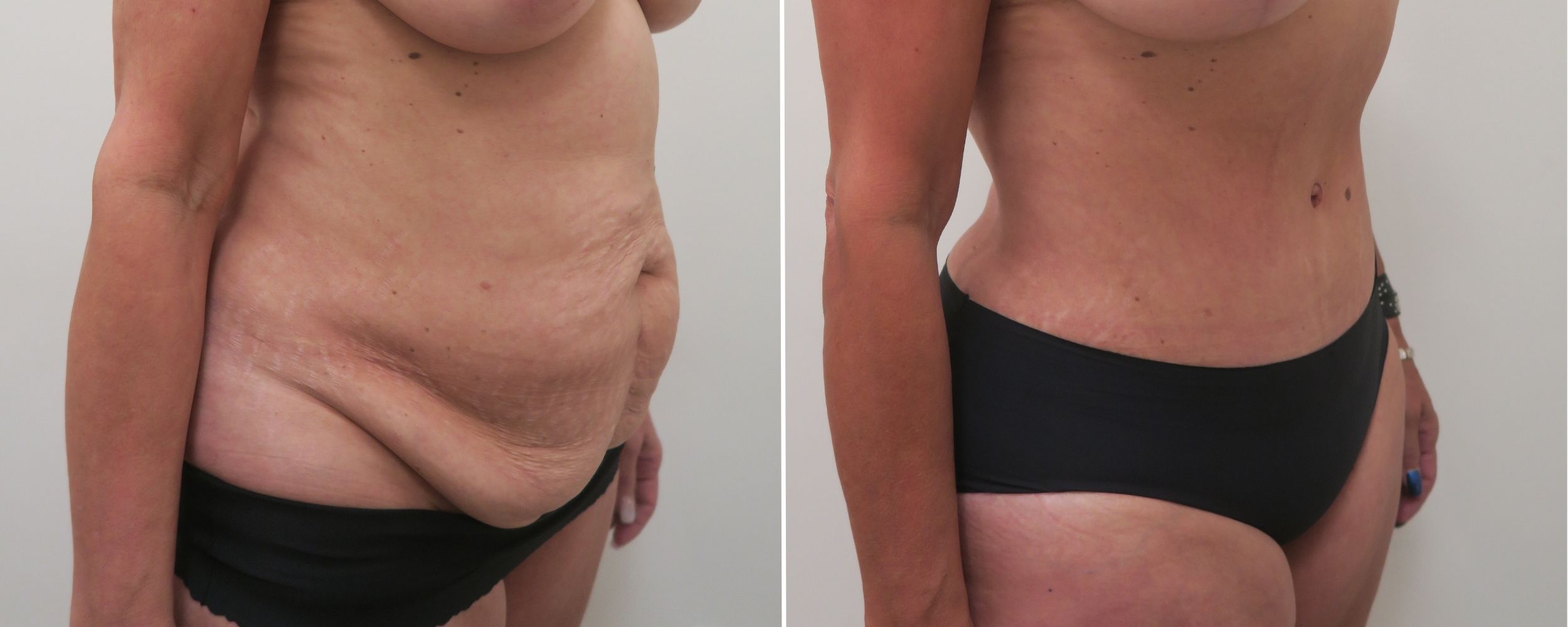
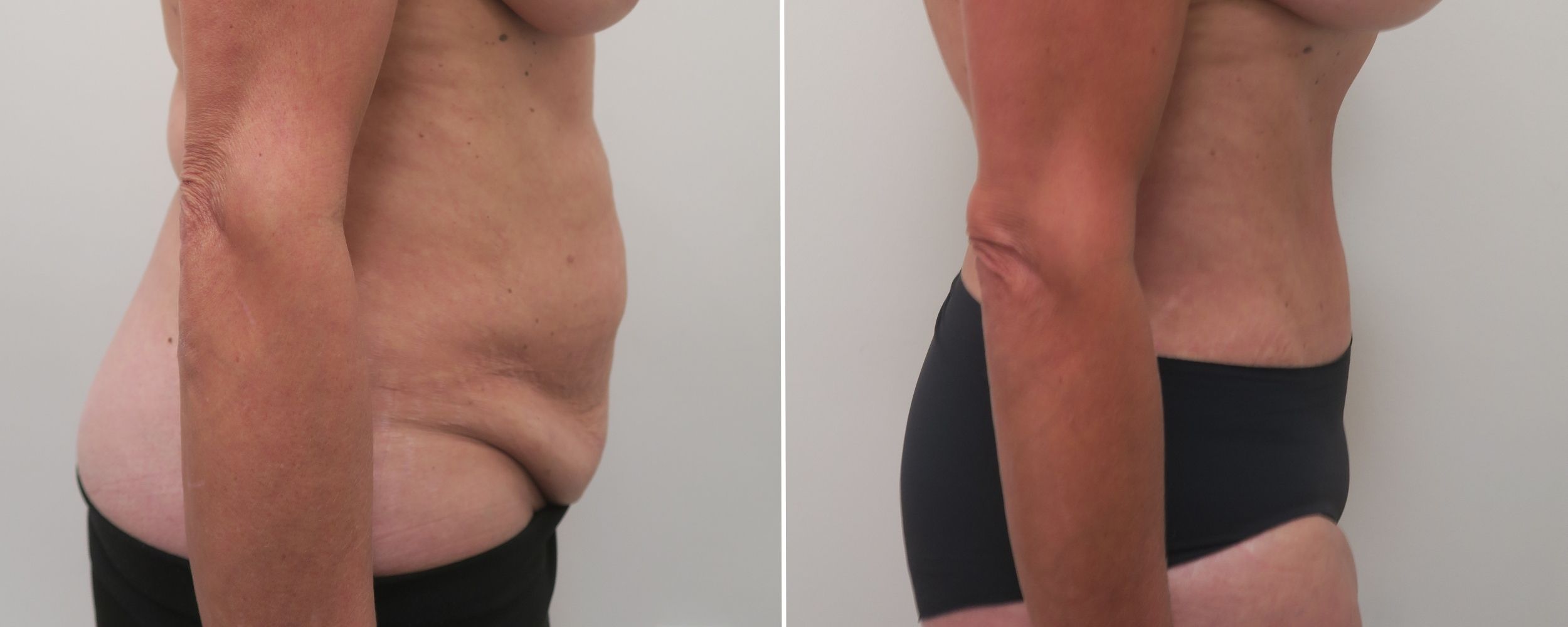
A Tummy Tuck, or Abdominoplasty, is a surgical procedure that removes excess abdominal skin and fat while tightening the underlying muscles to create a firmer, flatter midsection. It is particularly effective for patients who have experienced pregnancy, significant weight changes, or skin laxity due to aging.
At AvenueMD, Dr. Dimitrios Motakis performs Tummy Tuck procedures with an emphasis on proportion, precision, and natural results. The goal is not simply to flatten the abdomen, but to restore harmony between the core, waistline, and overall silhouette.
Each procedure is highly customized to the patient’s anatomy and goals, ensuring the most natural contour while minimizing visible scarring.
How does it work?
The procedure is performed under general anesthesia and typically takes two to three hours. A horizontal incision is made low on the abdomen, within the natural crease between the pubic area and the navel. Through this incision, excess skin and fat are removed, and the underlying abdominal muscles are tightened to repair separation and improve core support.
The remaining skin is then redraped smoothly over the abdomen, and the incision is closed with meticulous suturing to promote fine, minimal scarring.
For some patients, liposuction may be combined to enhance contour or refine the waistline. Mini Abdominoplasty techniques are also available for those requiring only limited correction in the lower abdomen.
In select cases, a Mini Abdominoplasty may be considered for patients with laxity confined to the lower abdomen below the umbilicus. This limited approach does not address skin above the belly button and does not involve tightening of the abdominal muscles. Mini Abdominoplasty does not require surgical drains and may be combined with liposuction in appropriately selected patients.
Recovery and downtime
Most patients return home the same day or after an overnight stay. Swelling, tightness, and mild discomfort are normal in the first week and are managed with medication and supportive garments.
Patients typically resume light activity within 10–14 days, while strenuous exercise and heavy lifting should be avoided for six weeks. Results improve steadily as swelling subsides, revealing a smoother, flatter, and more defined abdomen.
Scars are positioned discreetly and fade gradually with time, aided by AvenueMD’s advanced post-surgical care protocols.
Frequently Asked Questions
Who is a good candidate for a Tummy Tuck?
Ideal candidates are individuals in good health with loose or excess abdominal skin, weakened muscles, or persistent fullness that does not respond to diet or exercise.
What’s the difference between a full and mini Tummy Tuck?
A full Tummy Tuck addresses the entire abdomen, including muscle tightening and navel repositioning. A mini Tummy Tuck focuses on the area below the belly button for more localized refinement.
Will there be visible scarring?
Incisions are placed low and can be concealed under clothing or swimwear. With proper care, scars fade significantly over time.
How long is the recovery?
Most patients resume work and light activity within two weeks, with full recovery in about six weeks. Results continue to refine as the body heals.
Are results permanent?
Yes. Results are long-lasting when supported by a stable weight and healthy lifestyle. While natural aging continues, the improved contour remains for many years.
Can a Tummy Tuck be combined with other procedures?
Yes. It’s often combined with Liposuction, Breast Lift, or other body-contouring surgeries as part of a Mommy Makeover or comprehensive restoration plan.
Is a Tummy Tuck performed under general anesthesia?
Yes. Abdominoplasty is performed under general anesthesia to ensure patient comfort and safety throughout the procedure.
Will I need drains after a Tummy Tuck?
Drains are usually used following a full Abdominoplasty to enhance safety, help the body eliminate excess fluid, and support proper healing. In select cases, a drainless Tummy Tuck technique may be performed. Mini Abdominoplasty does not require drains. The use of drains is discussed in detail during consultation based on surgical plan and patient anatomy.
How long does swelling last after a Tummy Tuck?
Swelling is most noticeable in the first several weeks and gradually improves over a few months. Final contour continues to refine as healing progresses.
Can weight gain affect my results?
Significant weight changes after surgery can impact results. Maintaining a stable weight helps preserve long-term contour.
Can pregnancy affect a Tummy Tuck?
Yes. Pregnancy can stretch the skin and muscles again, potentially affecting results. Patients are typically advised to complete childbearing before surgery.
When will I see my final results?
Initial improvement is visible as swelling subsides, but final results typically emerge over several months as healing completes.
Is a Tummy Tuck appropriate for men?
Yes. Tummy Tuck surgery can be performed in men to address excess skin, fat, or muscle laxity, with techniques adapted to male anatomy.
Are there non-surgical alternatives to a Tummy Tuck?
Non-surgical treatments may improve skin quality or mild laxity, but they cannot correct muscle separation or significant excess skin. A Tummy Tuck remains the most effective option in these cases.
Featured Before / After
Abdominoplasty: 6830