


Can a Facelift Look Natural? A Deep Plane Surgeon Explains What Decides It
I get asked this question in almost every consultation, and the way it is usually asked tells me something. People are not asking whether facelift surgery can help. They have already decided it probably can. What they are asking is whether they will end up looking like the pulled, tight, slightly alarming faces they have seen and cannot unsee. So let me answer it directly.
Yes. A facelift can look completely natural. But not for the reason most websites give you.
The usual argument is that a good facelift makes a small change, and small changes are hard to spot. I think that argument is wrong, and I think it sells patients short. A properly done deep plane facelift makes a large change. Jowls go. The neck becomes clean. The cheek is back where it sat fifteen years earlier. That is not subtle. The reason it reads as natural is not that little was done. It is that what was done put your face back where it used to be, rather than tightening it into a shape it has never had.
That distinction is the whole article. Everything below is an explanation of it.
You never looked pulled at 35
Here is the way I explain it in clinic. Think about your face at 35 or 40. The cheek sat high on the bone. The jawline was one clean line. The neck had an angle. Nobody looked at you and thought you looked artificial, because that arrangement was your own anatomy doing what it does when the supporting structures are still where they belong.
Ageing does not add anything to your face. It lets things slide. The deep tissue that holds the cheek up loosens from its ligaments and drops down and forward. The jowl is cheek tissue that has migrated south of the jawline. Neck bands are a muscle that has separated in the midline. Every one of those changes is a displacement.
If the operation puts that tissue back where it came from, and does nothing else, the result cannot look artificial. It is the same face, with the same features in the same relationship to each other, that everyone who knew you at 40 already recognised. That is the standard I operate to, and it is the standard you should hold any surgeon to.
Where the pulled look actually comes from
The windswept, wide-mouthed, stretched face is not what a facelift looks like. It is what a skin lift looks like. For decades the operation consisted of separating the skin, pulling it back towards the ear and cutting off the excess. Skin is elastic. If you tighten it hard enough to change the shape of a face, the entire result is held by tension in the skin, and that tension does three predictable things.
It pulls sideways, because the ear is where the skin is anchored, so the cheek goes flat and wide instead of up. It shows at every fixed point, so the earlobe gets dragged down, the sideburn rides up, the little cartilage in front of the ear canal flattens, and the scars widen. And it relaxes within a year or two, because skin is not designed to hold anything, which historically pushed surgeons to pull harder the next time.
Tightening skin over tissue that has fallen is like pulling a bedsheet tight over a mattress that has slid off the frame. The sheet is smooth. The mattress is still on the floor.
The face does not age by loosening its skin. It ages by dropping its deeper structure. An operation that only addresses skin is addressing the wrong layer, and the pulled look is what that mistake looks like from the outside.
What a deep plane facelift does instead
Under the skin there is a structural layer of fascia and muscle. Surgeons call it the SMAS. It is continuous with the platysma muscle in the neck, and it is the layer that has actually descended.
A deep plane facelift goes beneath that layer, releases the ligaments that are tethering it in its dropped position, and moves the whole cheek and mid-face upward as a single block, in the direction it fell from. The skin stays attached to the tissue underneath it and goes along for the ride. When I close the incision, the skin is lying at rest. It is not doing any work. Nothing is pulling on the earlobe, the hairline or the corner of the mouth, because the lift is being held by structure, not by the closure.
That is why I perform deep plane facelifts exclusively. A standard SMAS lift tightens the deeper layer but leaves the ligaments intact, so the amount it can move is limited and the skin often ends up sharing the load. Releasing the ligaments is what lets the cheek move fully and what lets the skin be left alone. The two things are connected. You cannot have a big, natural change without both.
It also means the flap I am working with is thick and carries its own blood supply. That matters for healing, and it matters for what else I can do in the same operation, which I will come back to.
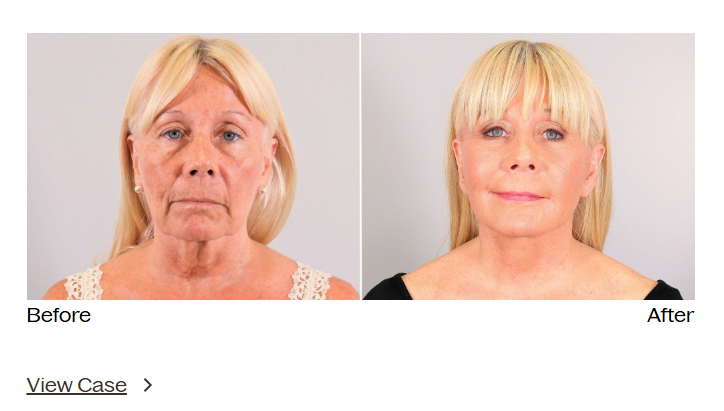
How to spot a facelift, and what a good one has none of
When people say a facelift surgery looks obvious, they are almost always reacting to a short list of specific details. Learn the list. It is how I look at other surgeons’ work and it is how you should look at mine.
The lateral sweep. Cheeks that look flat and drawn towards the ears, so the face is wider at the sides than it should be. This is a skin lift, or a lift pulled in the wrong direction.
The pixie ear. An earlobe that has been pulled forward or down, or that attaches straight into the cheek with no notch. It happens when the closure is under tension. It is one of the first things a trained eye checks.
The hairline. The sideburn should still be in front of the ear. The hairline behind the ear should be continuous. If the skin was dragged backwards, the sideburn rides up and a bald patch appears, and that is very hard to fix later.
The tragus. The small cartilage flap in front of the ear canal should keep its shape. Under tension it flattens, or the skin over it looks stretched and hairless.
The scars. Wide, pale, raised scars in front of the ear mean the closure was pulling. A scar closed without tension heals into the natural crease and, in most patients, becomes very hard to find.
A face that does not match the neck. A smooth jawline above a neck with loose skin and visible bands. Faces and necks age together, so when only one has changed, people notice.
Every item on that list is a tension problem. None of them are inherent to a facelift. They are inherent to putting the load on the skin.
Lift, volume and skin are three different jobs
A facelift repositions tissue. That is one of three things that change as a face ages, and a result only looks fully natural when all three are dealt with in proportion.
Position is the facelift itself. Jowls, sagging cheeks and a loose neck are tissue that has moved and can be moved back.
Volume is separate. Faces deflate with age, particularly the temples, the mid-cheek and around the eyes. If you lift a deflated face without addressing volume, you get something tight and hollow, and that is one of the classic versions of the “done” look. Where volume is needed, I add it during the same operation using fat grafting, moving a small amount of your own fat from elsewhere. It is an adjunct to the lift, not a substitute for it, and I use it where the anatomy calls for it rather than as a routine top-up.
Skin quality is the third. A facelift moves skin; it does not change it. Fine lines around the mouth, sun damage and pigment are surface problems, and no amount of repositioning fixes a surface problem. This is where a lot of otherwise good results fall down: a beautifully lifted face wearing sixty-year-old skin. In my practice, full-face laser resurfacing is done at the same time as the facelift, including over the lifted skin itself. That is possible precisely because a deep plane flap is thick and well supplied with blood. It is a standard part of the operation for me, not an add-on, and it is a large part of why patients come out looking well rather than merely tighter.
The neck is not optional
More often than not, the neck is what brought the patient in. It is also where a result is most likely to look incomplete.
Under the jaw, the platysma muscle separates into two vertical bands with age, and fat accumulates both above and below it. None of that responds to a lift of the lower face. It needs its own treatment, which for me means working on the muscle directly and, where needed, the fat beneath it, so the neck angle is rebuilt from the inside rather than the skin being pulled flat over the problem.
This is why the operation is properly called a face and neck lift. If a surgeon is quoting you a facelift, ask precisely what they intend to do with your neck, and whether the plan involves the muscle or only the skin. The answer tells you a great deal.
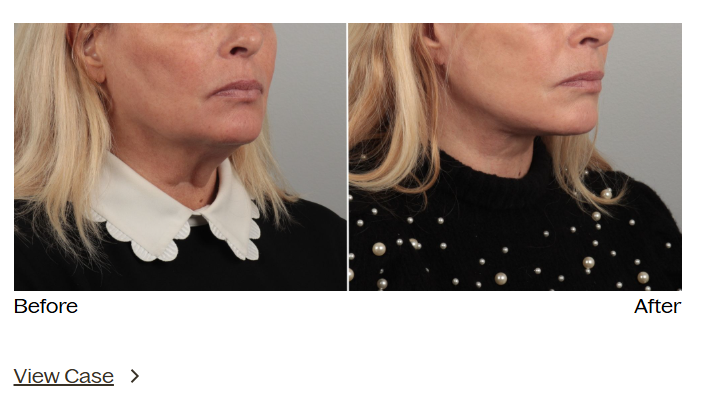
Will my expressions change?
No, and they should not. Your expressions are driven by the facial nerve, which lies deeper than the layer a facelift works in. The operation is not designed to alter how your face moves.
What you can expect is temporary numbness around the ears and cheeks for some weeks to months while the small sensory nerves recover. Actual weakness of movement is uncommon. Pooled data on deep plane facelifts across more than 10,000 patients put temporary weakness at roughly 1 in 100, and it resolves on its own over weeks to months. Permanent facial nerve injury was not seen in that series at all, and the rate for deep plane surgery is no higher than for less invasive techniques. The idea that going deeper means more nerve risk is an old assumption the numbers do not support. What governs the risk is the surgeon’s familiarity with where the nerve runs.
Most of the overdone faces you have seen are not facelifts
This one matters. A great deal of what people picture when they think of unnatural cosmetic work has never been near an operating room. Years of filler will change the proportions of a face, adding fullness in the cheeks and around the mouth that ends up reading as heavy and unfamiliar. Too much neurotoxin flattens expression. Neither of those is surgery, and neither tells you anything about what a facelift looks like. If anything, the patients who come to me after a decade of filler are asking me to reverse the look you are worried about.
What about the studies that say a facelift only takes off a few years?
You will find them quoted on other websites. Blinded observers look at before and after photographs and guess ages, and the average comes out at a few years younger. Two things about those studies.
First, they mostly reflect older, more conservative techniques, not the release and repositioning I have described. Second, and more important, they measure what a stranger can detect from a still photograph, which is not the same as what was corrected. A stranger has no idea what your jawline looked like. Your family does. When patients in a large deep plane series were asked how much younger they looked, their own estimate was close to twelve years, and I do not think they were wrong. They had the before picture in their heads.
So take the small numbers for what they are: evidence that a good result does not shout. Do not take them as the ceiling of what the operation does.
Timing and how much to do
There is no right age. Most of my facelift patients are between their late forties and their seventies, and I have good results at both ends. What changes is the size of the correction.
A patient whose changes are moderate needs less moved, and the result, while still obvious to them, is easy for the world to read as “you look well.” A patient who has waited until the changes are advanced can still get an excellent, natural result, but the difference will be larger and more people will notice that something has happened. That is not a reason to hurry, and it is not a reason to wait. It is simply something to know going in.
On how much to do: my job is to put things back, not to invent. If I recommend less than you expected, it is because more would move you past where your own face used to be, and that is where natural stops.
Do not judge the result at three weeks
Early recovery looks worse than the outcome, every time. Swelling and bruising peak in the first few days and the face looks tight, wide and unfamiliar for two or three weeks. Because I resurface the skin at the same time, there is also a period of redness while the new skin comes in. None of that is the result.
Most of the visible swelling has gone by a month. The tissues keep softening for several months, and scars mature over about a year. Judging your own face at three weeks is not useful, and judging a surgeon’s gallery from early photographs is not useful either. Six months is a fair point at which to look.
Will it still look natural in ten years?
You will keep ageing. Nothing stops that. But a deep plane lift ages the way an un-operated face ages, because the tissue was put back into a normal position rather than stretched into an abnormal one. It holds its position far longer than a skin lift, and when it does soften it softens evenly. A result that looked natural at one year does not become obvious at ten. That only happens when the result was being held by tension in the first place.
A note for men
Men have a few extra rules and they are unforgiving. Beard skin must not end up behind the ear or inside the ear canal, which is what happens when skin is moved too far. The sideburn has to stay in a male position. Male skin is thicker and more vascular, which changes the plan and the bleeding risk, and hairstyle often dictates where incisions can go. If you are a man researching this, look for male patients in a surgeon’s gallery, and look for more than one.
Non-surgical options and the word “natural”
Less invasive is not the same as more natural. Energy devices, threads and fillers all have their place, but none of them release a ligament or reposition the deep layer, so none of them do what a facelift does. Threads produce a modest, temporary change. Filler used to imitate a lift by loading up the cheeks is one of the most common causes of the heavy, overfilled face people describe as unnatural.
If your problem is descent, the only thing that reverses descent is putting the tissue back. Everything else is working around it.
[Before/after image placeholder 1: deep plane face and neck lift, lateral view, six months post-op]
How to read a before-and-after gallery
A gallery is the most useful thing you can look at before a consultation, if you look at it properly. Insist on side views, not just front views. Find patients whose starting point resembles yours in age, skin type and structure. Check when the after photographs were taken. Anything from about six months out is a fair basis for judging position and contour, since the swelling has settled by then and the scars have mostly faded, while three months or earlier is still recovery. And make sure lighting, angle and expression match the before, because a smile and a flash can flatter anyone.
Then run the list from earlier. Earlobes. Sideburns. Tragus. Scars. Neck. If they all pass, apply the only test that finally matters: does your first reaction say “that person has had something done,” or does it say “that person looks well”? The second is what you are looking for, and it should be true of the patients with the biggest changes, not just the small ones.
[Before/after image placeholder 2: deep plane face and neck lift with laser resurfacing, frontal view, six months post-op]
The surgeon decides, not the technique
Everything in this article comes down to judgment. Which layer to lift, how far to release, what to leave alone, whether to add volume, whether to resurface. Two surgeons can both write “deep plane” on a consent form and produce completely different faces.
Start by confirming you are dealing with a certified plastic surgeon. The Canadian Society of Plastic Surgeons is clear that only doctors certified in plastic surgery are plastic surgeons, and that no rule governs the title “cosmetic surgeon.” In Ontario, the College of Physicians and Surgeons of Ontario lists every doctor’s recognised specialty, registration status and any discipline history, and it takes five minutes to check.
Then look at how much of the surgeon’s practice is faces. Consistency across a gallery tells you more than a single impressive case. I am Dr. Dimitrios Motakis, Royal College-certified in plastic surgery, and my practice at AvenueMD in Toronto is focused on facial rejuvenation surgery. I operate the way I have described here because I have seen what the alternative looks like, and so have you.
If you'd like to speak with me about facelifts, please book a consultation.
Frequently asked questions
Can a facelift look natural?
Yes. A natural result comes from repositioning the deep structure of the face to where it previously sat, not from doing a small amount of work. The signs of an unnatural facelift are almost all signs of tension on the skin, and a deep plane lift closed without tension does not produce them.
What causes the pulled or windswept look?
Pulling skin sideways instead of releasing and repositioning the deeper layer. That tension flattens the cheeks, distorts the earlobes, displaces the hairline and widens the scars. When the lift is held by structure rather than by the skin, none of that happens.
Will people know I have had a facelift?
People who see you every day will notice that you look different and better, and most will not be able to say why. Strangers will simply see someone who looks well. What nobody should see is the operation.
Does a deep plane facelift look more natural than a SMAS facelift?
A deep plane facelift releases the ligaments and moves the cheek as a unit, which allows a larger correction while leaving the skin at rest. A standard SMAS lift tightens the deeper layer without releasing it, which limits how far it can move. In my view the deep plane approach is what allows a substantial change to read as natural, which is why it is the only facelift I perform.
Will my face still look natural in ten years?
You keep ageing from a better starting point. Because the tissue was put back into a normal position rather than stretched, the result ages the way a face is supposed to and does not become more obvious over time.
Is there an age when a facelift stops looking natural?
No. Anatomy, the size of the correction and the surgeon’s planning decide it, not the number. Larger corrections are simply more noticeable than smaller ones.
Do fillers look more natural than a facelift?
No. Fillers add volume; they do not reposition anything. Used to imitate a lift, they are one of the most common causes of the heavy, overfilled face people describe as unnatural.
Can laser resurfacing be done at the same time as a facelift?
Yes. In my practice full-face laser resurfacing is performed during the same operation, including over the lifted skin, because the thick, well-vascularised deep plane flap tolerates it. Treating skin quality at the same time as position is a large part of what makes the overall result read as natural.
Your Journey Starts With a Conversation
Schedule a personal consultation with one of our specialists and explore what’s possible, at your pace, in your way.